Overview
Cholesterol is a waxy substance found in your blood. Your body needs cholesterol to build healthy cells, but high levels of cholesterol can increase your risk of heart disease.
With high cholesterol, you can develop fatty deposits in your blood vessels. Eventually, these deposits grow, making it difficult for enough blood to flow through your arteries. Sometimes, those deposits can break suddenly and form a clot that causes a heart attack or stroke.
High cholesterol can be inherited, but it's often the result of unhealthy lifestyle choices, which make it preventable and treatable. A healthy diet, regular exercise and sometimes medication can help reduce high cholesterol.
Products & Services
Symptoms
High cholesterol has no symptoms. A blood test is the only way to detect if you have it.
When to see a doctor
According to the National Heart, Lung, and Blood Institute (NHLBI), a person's first cholesterol screening should occur between the ages of 9 and 11, and then be repeated every five years after that.
The NHLBI recommends that cholesterol screenings occur every one to two years for men ages 45 to 65 and for women ages 55 to 65. People over 65 should receive cholesterol tests annually.
If your test results aren't within desirable ranges, your doctor might recommend more-frequent measurements. Your doctor might also suggest more-frequent tests if you have a family history of high cholesterol, heart disease or other risk factors, such as diabetes or high blood pressure.
Causes
Cholesterol is carried through your blood, attached to proteins. This combination of proteins and cholesterol is called a lipoprotein. There are different types of cholesterol, based on what the lipoprotein carries. They are:
- Low-density lipoprotein (LDL). LDL, the "bad" cholesterol, transports cholesterol particles throughout your body. LDL cholesterol builds up in the walls of your arteries, making them hard and narrow.
- High-density lipoprotein (HDL). HDL, the "good" cholesterol, picks up excess cholesterol and takes it back to your liver.
A lipid profile also typically measures triglycerides, a type of fat in the blood. Having a high triglyceride level also can increase your risk of heart disease.
Factors you can control — such as inactivity, obesity and an unhealthy diet — contribute to harmful cholesterol and triglyceride levels. Factors beyond your control might play a role, too. For example, your genetic makeup might make it more difficult for your body to remove LDL cholesterol from your blood or break it down in the liver.
Medical conditions that can cause unhealthy cholesterol levels include:
- Chronic kidney disease
- Diabetes
- HIV/AIDS
- Hypothyroidism
- Lupus
Cholesterol levels can also be worsened by some types of medications you may be taking for other health problems, such as:
- Acne
- Cancer
- High blood pressure
- HIV/AIDS
- Irregular heart rhythms
- Organ transplants
Risk factors
Factors that can increase your risk of unhealthy cholesterol levels include:
- Poor diet. Eating too much saturated fat or trans fats can result in unhealthy cholesterol levels. Saturated fats are found in fatty cuts of meat and full-fat dairy products. Trans fats are often found in packaged snacks or desserts.
- Obesity. Having a body mass index (BMI) of 30 or greater puts you at risk of high cholesterol.
- Lack of exercise. Exercise helps boost your body's HDL, the "good," cholesterol.
- Smoking. Cigarette smoking may lower your level of HDL, the "good," cholesterol.
- Alcohol. Drinking too much alcohol can increase your total cholesterol level.
- Age. Even young children can have unhealthy cholesterol, but it's much more common in people over 40. As you age, your liver becomes less able to remove LDL cholesterol.
Complications
Development of atherosclerosis
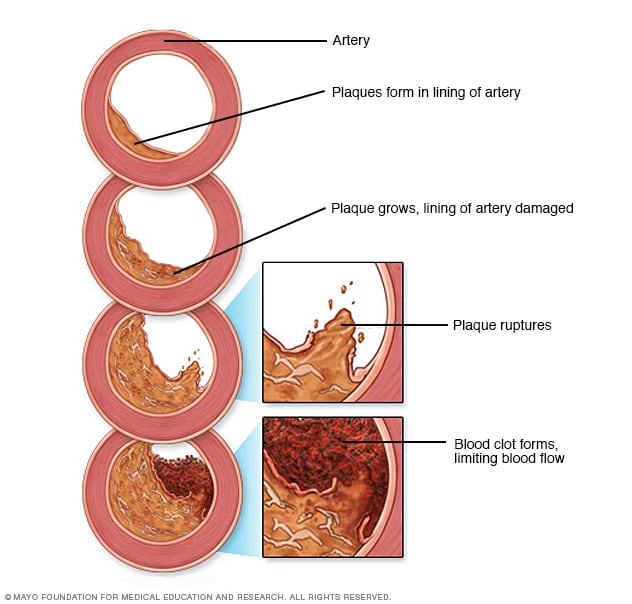
Development of atherosclerosis
If there's too much cholesterol in the blood, the cholesterol and other substances may form deposits called plaque. Plaque can cause an artery to become narrowed or blocked. If a plaque ruptures, a blood clot can form. Plaque and blood clots can reduce blood flow through an artery.
High cholesterol can cause a dangerous accumulation of cholesterol and other deposits on the walls of your arteries (atherosclerosis). These deposits (plaques) can reduce blood flow through your arteries, which can cause complications, such as:
- Chest pain. If the arteries that supply your heart with blood (coronary arteries) are affected, you might have chest pain (angina) and other symptoms of coronary artery disease.
- Heart attack. If plaques tear or rupture, a blood clot can form at the plaque-rupture site — blocking the flow of blood or breaking free and plugging an artery downstream. If blood flow to part of your heart stops, you'll have a heart attack.
- Stroke. Similar to a heart attack, a stroke occurs when a blood clot blocks blood flow to part of your brain.
Prevention
The same heart-healthy lifestyle changes that can lower your cholesterol can help prevent you from having high cholesterol in the first place. To help prevent high cholesterol, you can:
- Eat a low-salt diet that emphasizes fruits, vegetables and whole grains
- Limit the amount of animal fats and use good fats in moderation
- Lose extra pounds and maintain a healthy weight
- Quit smoking
- Exercise on most days of the week for at least 30 minutes
- Drink alcohol in moderation, if at all
- Manage stress
The Mayo Clinic experience and patient stories
Our patients tell us that the quality of their interactions, our attention to detail and the efficiency of their visits mean health care like they've never experienced. See the stories of satisfied Mayo Clinic patients.
Jan. 11, 2023