Overview
IgA nephropathy (nuh-FROP-uh-thee), also known as Berger disease, is a kidney disease. It happens when a germ-fighting protein called immunoglobulin A (IgA) builds up in the kidneys. This causes a type of swelling called inflammation that, over time, can make it harder for the kidneys to filter waste from the blood.
IgA nephropathy often becomes worse slowly over years. But the course of the disease varies from person to person. Some people leak blood into their urine without having other problems. Others might have complications such as losing kidney function and spilling protein into the urine. Still others develop kidney failure, which means the kidneys stop working well enough to filter the body's waste on their own.
There's no cure for IgA nephropathy, but medicines can slow how quickly it becomes worse. Some people need treatment to lower inflammation, reduce the spilling of protein into the urine and prevent the kidneys from failing. Such treatments may help the disease become not active, a state called remission. Keeping blood pressure under control and lowering cholesterol also slow the disease.
Products & Services
Symptoms
IgA nephropathy often doesn't cause symptoms early on. You might not notice any health effects for 10 years or more. Sometimes, routine medical tests find signs of the disease, such as protein and red blood cells in the urine that are seen under a microscope.
When IgA nephropathy causes symptoms, they might include:
- Cola- or tea-colored urine caused by blood. You might notice these color changes after a cold, sore throat or respiratory infection.
- Blood that can be seen in the urine.
- Foamy urine from protein leaking into the urine. This is called proteinuria.
- Pain on one or both sides of the back below the ribs.
- Swelling in the hands and feet called edema.
- High blood pressure.
- Weakness and tiredness.
If the disease leads to kidney failure, symptoms may include:
- Rashes and itchy skin.
- Muscle cramps.
- Upset stomach and vomiting.
- Less appetite.
- Metallic taste in the mouth.
- Confusion.
Kidney failure is life-threatening without treatment. But dialysis or a kidney transplant can help people live for many more years.
When to see a doctor
See your doctor if you think you have symptoms of IgA nephropathy. It's key to get a checkup if you notice blood in your urine. Various conditions can cause this symptom. But if it keeps happening or it doesn't go away, it might be a sign of a serious health problem. Also see your doctor if you notice sudden swelling in your hands or feet.
Causes
Kidney cross section
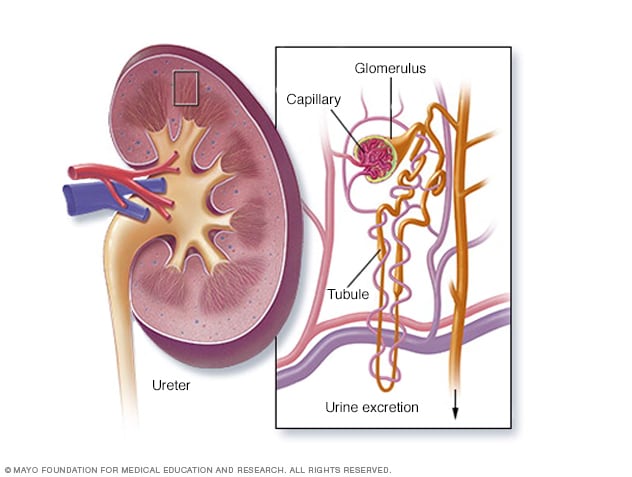
Kidney cross section
The kidneys remove waste and extra fluid from the blood through filtering units called nephrons. Each nephron contains a filter, called a glomerulus. Each filter has tiny blood vessels called capillaries. When blood flows into a glomerulus, tiny bits, called molecules, of water, minerals and nutrients, and wastes pass through the capillary walls. Large molecules, such as proteins and red blood cells, do not. The part that's filtered then passes into another part of the nephron called the tubule. The water, nutrients and minerals the body needs are sent back to the bloodstream. The extra water and waste become urine that flows to the bladder.
The kidneys are two bean-shaped, fist-sized organs located at the small of the back, one on each side of the spine. Each kidney contains tiny blood vessels called glomeruli. These vessels filter waste, extra water and other substances from the blood. Then the filtered blood goes back into the bloodstream. The waste products pass into the bladder and out of the body in urine.
Immunoglobulin A (IgA) is a type of protein called an antibody. The immune system makes IgA to help attack germs and fight infections. But with IgA nephropathy, this protein collects in the glomeruli. This causes inflammation and affects their filtering ability over time.
Researchers don't know exactly what causes IgA to build up in the kidneys. But the following things might be linked with it:
- Genes. IgA nephropathy is more common in some families and in certain ethnic groups, such as people of Asian and European descent.
- Liver diseases. These include scarring of the liver called cirrhosis and chronic hepatitis B and C infections.
- Celiac disease. Eating gluten, a protein found in most grains, triggers this digestive condition.
- Infections. These include HIV and some bacterial infections.
Risk factors
The exact cause of IgA nephropathy is unknown. But these factors might raise the risk of getting it:
- Sex. In North America and Western Europe, IgA nephropathy affects at least twice as many men as it does women.
- Ethnicity. IgA nephropathy is more common in white people and people of Asian descent than it is in Black people.
- Age. IgA nephropathy most often develops between the mid-teens and mid-30s.
- Family history. IgA nephropathy appears to run in some families.
Complications
The course of IgA nephropathy varies from person to person. Some people have the disease for years with few or no problems. Many don't get diagnosed. Other people develop one or more of the following complications:
- High blood pressure. Damage to the kidneys from IgA buildup can raise blood pressure. And high blood pressure can do more damage to the kidneys.
- High cholesterol. High levels of cholesterol can raise the risk of a heart attack.
- Acute kidney failure. If the kidneys can't filter blood well enough due to buildup of IgA, levels of waste products rise quickly in the blood. And if kidney function gets worse very quickly, health care professionals may use the term rapidly progressive glomerulonephritis.
- Chronic kidney disease. IgA nephropathy can cause the kidneys to stop working over time. Then a treatment called dialysis or a kidney transplant is needed to live.
- Nephrotic syndrome. This is a group of problems that can be caused by damage to the glomeruli. The problems can include high urine protein levels, low blood protein levels, high cholesterol and lipids, and swelling of the eyelids, feet and stomach area.
Prevention
You can't prevent IgA nephropathy. Talk with your doctor if you have a family history of the disease. Ask what you can do to keep your kidneys healthy. For example, it helps to lower high blood pressure and keep cholesterol at healthy levels.