Overview
Skin cancer — the abnormal growth of skin cells — most often develops on skin exposed to the sun. But this common form of cancer can also occur on areas of your skin not ordinarily exposed to sunlight.
There are three major types of skin cancer — basal cell carcinoma, squamous cell carcinoma and melanoma.
You can reduce your risk of skin cancer by limiting or avoiding exposure to ultraviolet (UV) radiation. Checking your skin for suspicious changes can help detect skin cancer at its earliest stages. Early detection of skin cancer gives you the greatest chance for successful skin cancer treatment.
Skin cancer care at Mayo Clinic
Products & Services
Types
Symptoms
Where skin cancer develops
Basal cell carcinoma on white skin
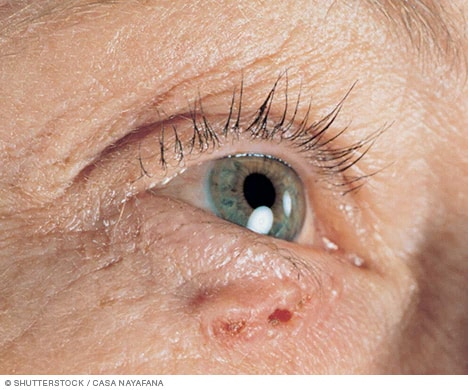
Basal cell carcinoma on white skin
Basal cell carcinoma is a type of skin cancer that most often develops on areas of skin exposed to the sun, such as the face. On white skin, basal cell carcinoma often looks like a bump that's skin-colored or pink.
Squamous cell carcinoma of the skin
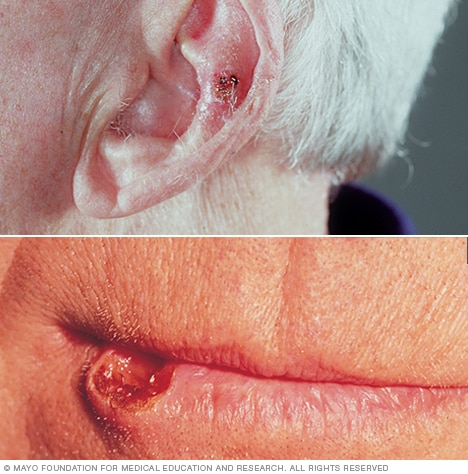
Squamous cell carcinoma of the skin
Sun-exposed areas such as the lips and ears are especially likely to develop squamous cell carcinoma of the skin.
Melanoma
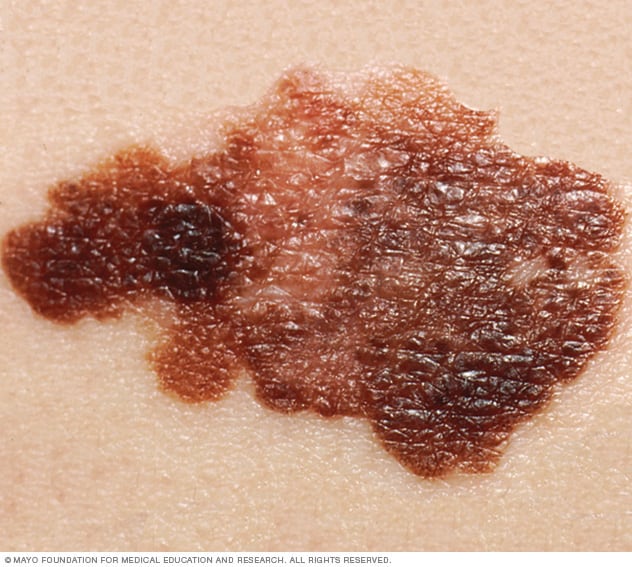
Melanoma
The first sign of melanoma is often a mole that changes size, shape or color. This melanoma shows color variations and an irregular border, both of which are melanoma warning signs.
Merkel cell carcinoma
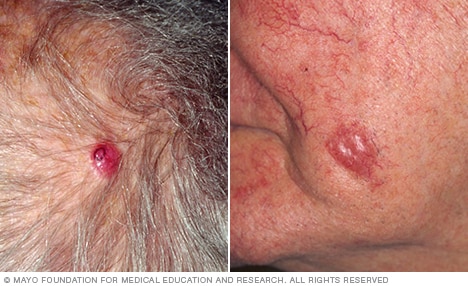
Merkel cell carcinoma
Merkel cell carcinoma is a rare, aggressive skin cancer. It appears as a painless, flesh-colored or bluish-red nodule growing on your skin.
Skin cancer develops primarily on areas of sun-exposed skin, including the scalp, face, lips, ears, neck, chest, arms and hands, and on the legs in women. But it can also form on areas that rarely see the light of day — your palms, beneath your fingernails or toenails, and your genital area.
Skin cancer affects people of all skin tones, including those with darker complexions. When melanoma occurs in people with dark skin tones, it's more likely to occur in areas not normally exposed to the sun, such as the palms of the hands and soles of the feet.
Basal cell carcinoma signs and symptoms
Basal cell carcinoma usually occurs in sun-exposed areas of your body, such as your neck or face.
Basal cell carcinoma may appear as:
- A pearly or waxy bump
- A flat, flesh-colored or brown scar-like lesion
- A bleeding or scabbing sore that heals and returns
Squamous cell carcinoma signs and symptoms
Most often, squamous cell carcinoma occurs on sun-exposed areas of your body, such as your face, ears and hands. People with darker skin are more likely to develop squamous cell carcinoma on areas that aren't often exposed to the sun.
Squamous cell carcinoma may appear as:
- A firm, red nodule
- A flat lesion with a scaly, crusted surface
Melanoma signs and symptoms
Melanoma can develop anywhere on your body, in otherwise normal skin or in an existing mole that becomes cancerous. Melanoma most often appears on the face or the trunk of affected men. In women, this type of cancer most often develops on the lower legs. In both men and women, melanoma can occur on skin that hasn't been exposed to the sun.
Melanoma can affect people of any skin tone. In people with darker skin tones, melanoma tends to occur on the palms or soles, or under the fingernails or toenails.
Melanoma signs include:
- A large brownish spot with darker speckles
- A mole that changes in color, size or feel or that bleeds
- A small lesion with an irregular border and portions that appear red, pink, white, blue or blue-black
- A painful lesion that itches or burns
- Dark lesions on your palms, soles, fingertips or toes, or on mucous membranes lining your mouth, nose, vagina or anus
Signs and symptoms of less common skin cancers
Other, less common types of skin cancer include:
Kaposi sarcoma. This rare form of skin cancer develops in the skin's blood vessels and causes red or purple patches on the skin or mucous membranes.
Kaposi sarcoma mainly occurs in people with weakened immune systems, such as people with AIDS, and in people taking medications that suppress their natural immunity, such as people who've undergone organ transplants.
Other people with an increased risk of Kaposi sarcoma include young men living in Africa or older men of Italian or Eastern European Jewish heritage.
- Merkel cell carcinoma. Merkel cell carcinoma causes firm, shiny nodules that occur on or just beneath the skin and in hair follicles. Merkel cell carcinoma is most often found on the head, neck and trunk.
- Sebaceous gland carcinoma. This uncommon and aggressive cancer originates in the oil glands in the skin. Sebaceous gland carcinomas — which usually appear as hard, painless nodules — can develop anywhere, but most occur on the eyelid, where they're frequently mistaken for other eyelid problems.
When to see a doctor
Make an appointment with your doctor if you notice any changes to your skin that worry you. Not all skin changes are caused by skin cancer. Your doctor will investigate your skin changes to determine a cause.
Causes
Where skin cancer develops
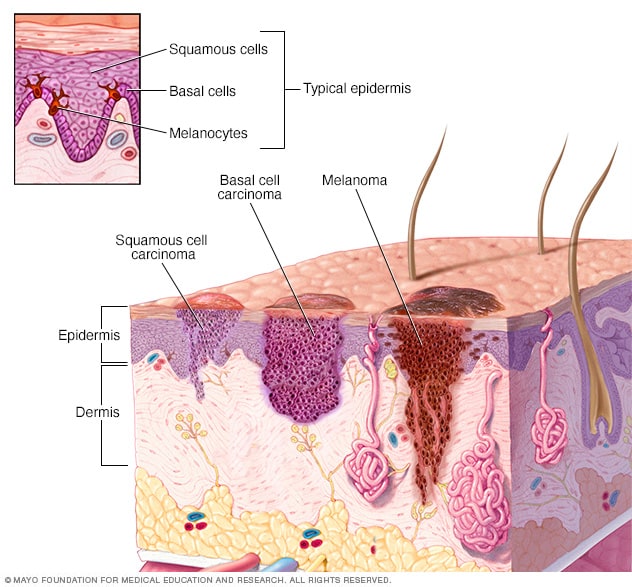
Where skin cancer develops
Skin cancer begins in the cells that make up the outer layer of the skin, called the epidermis. One type of skin cancer called basal cell carcinoma begins in the basal cells. Basal cells make skin cells that keep pushing older cells toward the surface. As new cells move up, they become squamous cells. Skin cancer that starts in the squamous cells is called squamous cell carcinoma of the skin. Melanoma, another type of skin cancer, comes from the pigment cells, called melanocytes.
Skin cancer occurs when errors (mutations) occur in the DNA of skin cells. The mutations cause the cells to grow out of control and form a mass of cancer cells.
Cells involved in skin cancer
Skin cancer begins in your skin's top layer — the epidermis. The epidermis is a thin layer that provides a protective cover of skin cells that your body continually sheds. The epidermis contains three main types of cells:
- Squamous cells lie just below the outer surface and function as the skin's inner lining.
- Basal cells, which produce new skin cells, sit beneath the squamous cells.
- Melanocytes — which produce melanin, the pigment that gives skin its normal color — are located in the lower part of your epidermis. Melanocytes produce more melanin when you're in the sun to help protect the deeper layers of your skin.
Where your skin cancer begins determines its type and your treatment options.
Ultraviolet light and other potential causes
Much of the damage to DNA in skin cells results from ultraviolet (UV) radiation found in sunlight and in the lights used in tanning beds. But sun exposure doesn't explain skin cancers that develop on skin not ordinarily exposed to sunlight. This indicates that other factors may contribute to your risk of skin cancer, such as being exposed to toxic substances or having a condition that weakens your immune system.
Risk factors
Factors that may increase your risk of skin cancer include:
- Fair skin. Anyone, regardless of skin color, can get skin cancer. However, having less pigment (melanin) in your skin provides less protection from damaging UV radiation. If you have blond or red hair and light-colored eyes, and you freckle or sunburn easily, you're much more likely to develop skin cancer than is a person with darker skin.
- A history of sunburns. Having had one or more blistering sunburns as a child or teenager increases your risk of developing skin cancer as an adult. Sunburns in adulthood also are a risk factor.
- Excessive sun exposure. Anyone who spends considerable time in the sun may develop skin cancer, especially if the skin isn't protected by sunscreen or clothing. Tanning, including exposure to tanning lamps and beds, also puts you at risk. A tan is your skin's injury response to excessive UV radiation.
- Sunny or high-altitude climates. People who live in sunny, warm climates are exposed to more sunlight than are people who live in colder climates. Living at higher elevations, where the sunlight is strongest, also exposes you to more radiation.
- Moles. People who have many moles or abnormal moles called dysplastic nevi are at increased risk of skin cancer. These abnormal moles — which look irregular and are generally larger than normal moles — are more likely than others to become cancerous. If you have a history of abnormal moles, watch them regularly for changes.
- Precancerous skin lesions. Having skin lesions known as actinic keratoses can increase your risk of developing skin cancer. These precancerous skin growths typically appear as rough, scaly patches that range in color from brown to dark pink. They're most common on the face, head and hands of fair-skinned people whose skin has been sun damaged.
- A family history of skin cancer. If one of your parents or a sibling has had skin cancer, you may have an increased risk of the disease.
- A personal history of skin cancer. If you developed skin cancer once, you're at risk of developing it again.
- A weakened immune system. People with weakened immune systems have a greater risk of developing skin cancer. This includes people living with HIV/AIDS and those taking immunosuppressant drugs after an organ transplant.
- Exposure to radiation. People who received radiation treatment for skin conditions such as eczema and acne may have an increased risk of skin cancer, particularly basal cell carcinoma.
- Exposure to certain substances. Exposure to certain substances, such as arsenic, may increase your risk of skin cancer.
Prevention
Most skin cancers are preventable. To protect yourself, follow these skin cancer prevention tips:
Avoid the sun during the middle of the day. For many people in North America, the sun's rays are strongest between about 10 a.m. and 4 p.m. Schedule outdoor activities for other times of the day, even in winter or when the sky is cloudy.
You absorb UV radiation year-round, and clouds offer little protection from damaging rays. Avoiding the sun at its strongest helps you avoid the sunburns and suntans that cause skin damage and increase your risk of developing skin cancer. Sun exposure accumulated over time also may cause skin cancer.
Wear sunscreen year-round. Sunscreens don't filter out all harmful UV radiation, especially the radiation that can lead to melanoma. But they play a major role in an overall sun protection program.
Use a broad-spectrum sunscreen with an SPF of at least 30, even on cloudy days. Apply sunscreen generously, and reapply every two hours — or more often if you're swimming or perspiring. Use a generous amount of sunscreen on all exposed skin, including your lips, the tips of your ears, and the backs of your hands and neck.
Wear protective clothing. Sunscreens don't provide complete protection from UV rays. So cover your skin with dark, tightly woven clothing that covers your arms and legs, and a broad-brimmed hat, which provides more protection than a baseball cap or visor does.
Some companies also sell photoprotective clothing. A dermatologist can recommend an appropriate brand.
Don't forget sunglasses. Look for those that block both types of UV radiation — UVA and UVB rays.
- Avoid tanning beds. Lights used in tanning beds emit UV rays and can increase your risk of skin cancer.
Be aware of sun-sensitizing medications. Some common prescription and over-the-counter drugs, including antibiotics, can make your skin more sensitive to sunlight.
Ask your doctor or pharmacist about the side effects of any medications you take. If they increase your sensitivity to sunlight, take extra precautions to stay out of the sun in order to protect your skin.
Check your skin regularly and report changes to your doctor. Examine your skin often for new skin growths or changes in existing moles, freckles, bumps and birthmarks.
With the help of mirrors, check your face, neck, ears and scalp. Examine your chest and trunk, and the tops and undersides of your arms and hands. Examine both the front and back of your legs, and your feet, including the soles and the spaces between your toes. Also check your genital area and between your buttocks.
Dec. 06, 2022